
What Happens at the N-400 Interview: Step by Step
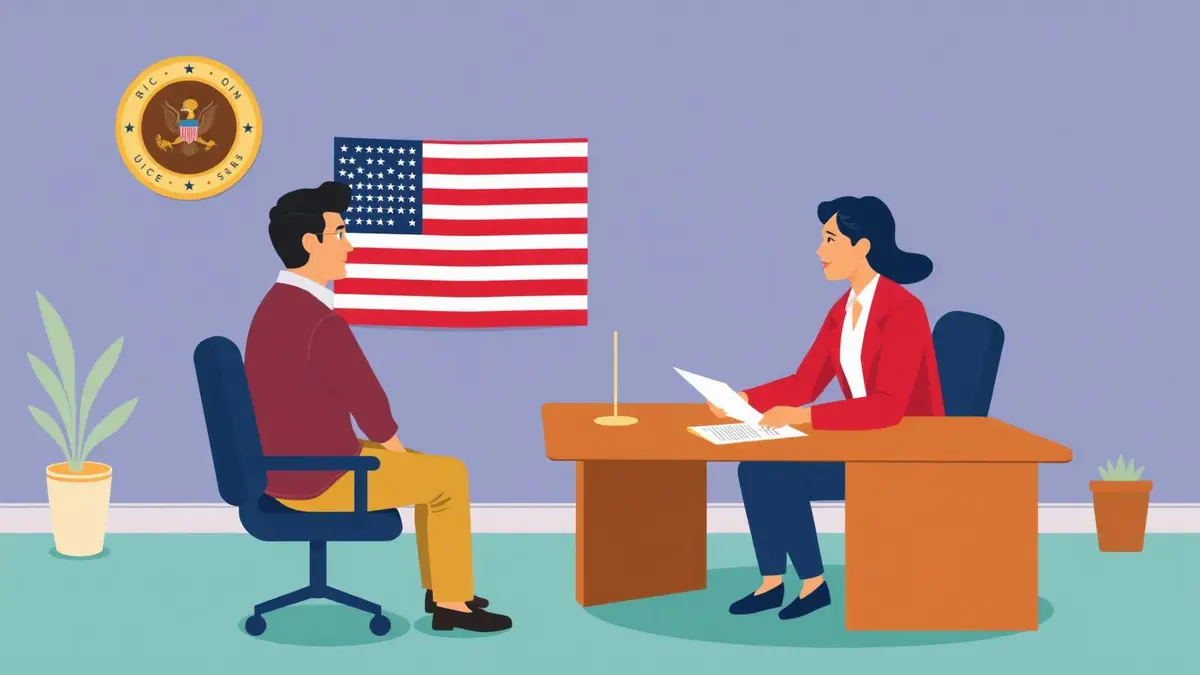
The N-400 naturalization interview is the moment your citizenship application becomes real. A USCIS officer reviews your application in front of you, asks you questions, and administers the English and civics tests — usually in the same 20 to 40 minute meeting. Most applicants describe it as calmer than they expected. Officers are trained to help you succeed, not to trip you up.
This guide walks through exactly what happens from check-in through the oath ceremony, so nothing on the day surprises you.
Before the interview: what to bring
Your interview appointment notice tells you the date, time, and USCIS field office — USCIS assigns that office based on your ZIP code, not your preference. If you're not sure which office serves you, see where you take the US citizenship test. Arrive at least 30 minutes early — security lines can be long, and being late can get your interview rescheduled by months.
Bring:
- Your interview appointment notice (Form I-797C)
- Your Permanent Resident Card (green card)
- A state-issued photo ID (driver's license or state ID)
- Every passport — current and expired — issued since you became a permanent resident
- Any travel documents you have used (advance parole, refugee travel document)
- Anything USCIS specifically asked for in the appointment notice (updated tax returns, marriage certificates, divorce decrees, selective service registration, court disposition records, etc.)
- Your reading glasses if you need them
Dress neatly. You do not need a suit, but treat it like a job interview: business casual is perfect.
Step 1: Check-in and waiting
You go through building security (like an airport), then check in at the reception window on your appointment floor. You will hand over your appointment notice, take a seat, and wait to be called by name. Bring something to read — wait times of 30 to 90 minutes are common even if you arrived on time.
Step 2: The oath to tell the truth
The officer greets you, brings you to a small office, and asks you to raise your right hand and swear to tell the truth. This is a formal oath but it takes ten seconds. Say "I do" and sit down.
Step 3: ID check and application review
The officer confirms your identity (green card, state ID, passport), then goes through your N-400 application page by page. They will ask you to confirm the answers you gave, and to update anything that has changed since you filed — a new address, a new job, new travel, a new arrest, a marriage or divorce, a new child.
Answer honestly, even if you think the answer is bad. Lying to a USCIS officer is a much bigger problem than any of the things applicants typically try to hide (a speeding ticket, a forgotten trip abroad, unpaid taxes now on a payment plan). If you do not understand a question, ask the officer to repeat or explain it.
Step 4: The English test (reading and writing)
The English test has three parts:
- Speaking: not a formal test. The officer evaluates your English through your conversation about your application.
- Reading: the officer shows you a sentence on a screen or paper. Read it aloud. You get three tries — you only need to read one sentence correctly. Vocabulary comes from the official USCIS reading list.
- Writing: the officer reads you a sentence and you write it down. Again, three tries, only one correct is needed. Vocabulary comes from the official USCIS writing list.
Practice both in advance with our reading and writing tool so the vocabulary is familiar.
Step 5: The civics test
This is the part most people worry about. Which version you take depends on when USCIS received your N-400:
- 2025 test (N-400 received on or after October 20, 2025): the officer asks up to 20 questions from the 128-question bank; you need 12 correct to pass. The officer stops at 12 correct or 9 wrong.
- 2008 test (N-400 received before October 20, 2025): the officer asks up to 10 questions from the 100-question bank; you need 6 correct.
The officer reads each question aloud. Answer in English (unless you qualify for a language exemption — see our exemptions guide). You do not need to answer word-for-word; an answer with the same meaning is accepted. If you do not know an answer, say so and move on — there is no penalty beyond the wrong count.
Step 6: The decision
At the end of the interview the officer tells you one of three things:
- Granted: you passed everything. You will get a notice for your oath ceremony (usually within a few weeks) or, in some field offices, on the same day.
- Continued: the officer needs more information (missing documents, a background check pending, a portion to retake). Retests are usually scheduled 60–90 days later.
- Denied: rare at the interview stage. You will receive a written explanation and can appeal or reapply.
Step 7: The oath ceremony
You are not a citizen yet at the end of the interview — you become a citizen when you take the Oath of Allegiance at a formal ceremony. Some field offices do same-day ceremonies; most schedule you back within a few weeks. Bring the completed questionnaire USCIS gives you, your green card (which you surrender that day), and a friend or family member if you want. At the end you receive your Certificate of Naturalization — the document that proves you are a U.S. citizen.
Common interview mistakes to avoid
- Arriving late. Rescheduling can add months.
- Forgetting your green card. The officer needs to see it and record it.
- Bringing outdated tax returns or missing selective service confirmation if USCIS asked for them.
- Guessing on the civics test instead of saying "I don't know." A confident wrong answer counts the same as any other wrong answer, but guessing can eat time you need for later questions.
- Volunteering information the officer didn't ask for. Answer the question, stop, and wait.
What to do the week before
- Take a full practice test and any flashcard review you have scheduled.
- Verify the "changing" answers (President, Vice President, Speaker, your governor, your senators) on uscis.gov/citizenship/testupdates and our state pages.
- Assemble your interview folder the night before, not the morning of.
- Confirm your travel plan to the field office and add time for parking.
- Sleep. Do not cram at 1am.
You have already done the hard part — years of permanent residency, filing the N-400, gathering documents. The interview is the last mile. Prepare the test material, be honest with the officer, and you will pass.