
65/20, 55/15, 50/20: Citizenship Test Exemptions Explained
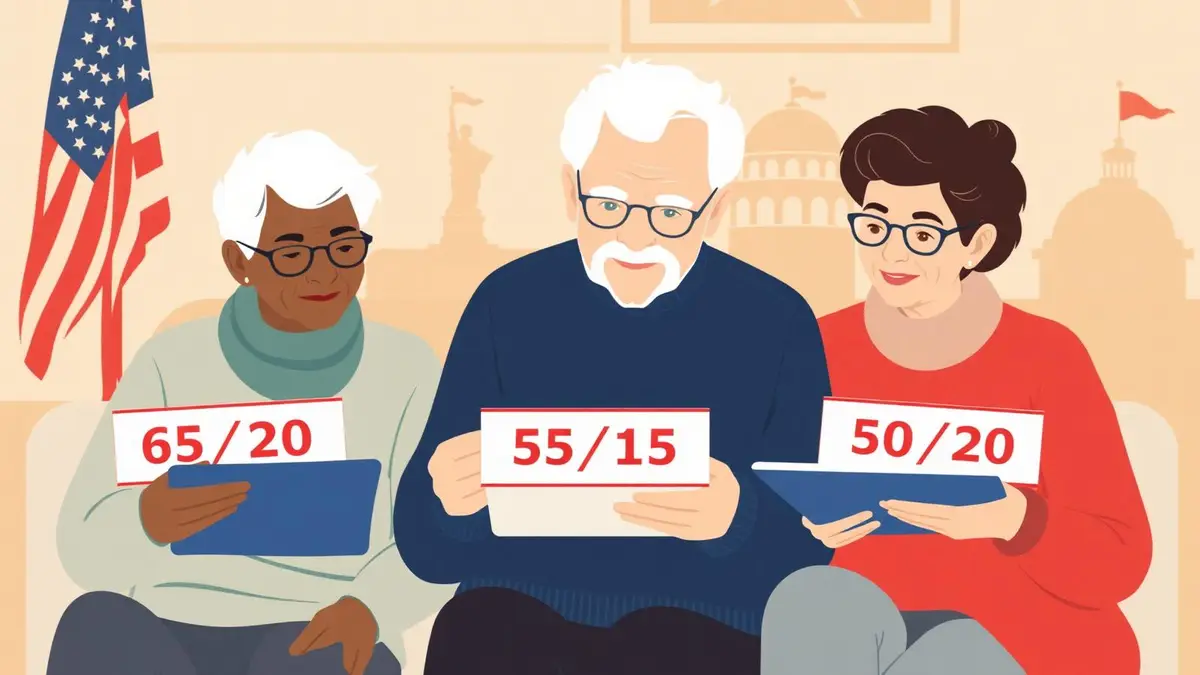
Not every applicant has to study the full 128-question civics test in English. USCIS has three long-standing special-consideration rules for older green card holders — commonly called 65/20, 55/15, and 50/20. Depending on your age and how long you have been a permanent resident, you may be able to (a) take the test in your native language with an interpreter, (b) skip the English portion entirely, and (c) study a reduced set of civics questions.
These rules were kept in place when USCIS launched the 2025 test. Here is exactly who qualifies, what changes, and how to prepare.
The 65/20 rule (biggest break)
Qualification: at the time you file Form N-400, you are 65 or older AND you have been a lawful permanent resident for at least 20 years.
What you get:
- Take the civics test in your native language. You bring your own interpreter (a family member or friend is fine).
- Study a reduced list. USCIS marks specific questions on the study bank with an asterisk (*). You only need to know the asterisked questions — on our study tools they are flagged with the "65/20" badge.
- You are exempt from the English test (reading, writing, and the speaking evaluation).
The 65/20 rule is by far the biggest reduction in study material. The asterisked list is short enough for most applicants to master in two to three weeks.
The 55/15 rule (English exemption)
Qualification: 55 or older AND a lawful permanent resident for at least 15 years.
What you get:
- Take the civics test in your native language with an interpreter.
- You are exempt from the English test.
- You still study the full civics bank — not the reduced 65/20 list. That means 128 questions if you file on or after October 20, 2025, or 100 questions if you filed before.
The 50/20 rule
Qualification: 50 or older AND a lawful permanent resident for at least 20 years.
What you get:
- Take the civics test in your native language with an interpreter.
- You are exempt from the English test.
- You still study the full civics bank.
50/20 and 55/15 give you the same rights — they just capture different combinations of age and residency. If you qualify for either, you are covered.
Medical disability exception (Form N-648)
Separate from the age-based rules, applicants with a physical or mental impairment that has lasted (or is expected to last) 12+ months can be exempted from the English and civics requirements entirely. This requires Form N-648, completed and signed by a licensed medical or clinical professional. USCIS reviews N-648 forms strictly — the form must clearly link the disability to the inability to learn the material. Talk to an immigration attorney or accredited representative if you think this applies to you.
A quick eligibility check
Ask yourself, on the day you file the N-400:
- Am I 65 or older with 20+ years as a permanent resident? → 65/20 (reduced list + native language).
- Am I 55 or older with 15+ years? → 55/15 (native language, full bank).
- Am I 50 or older with 20+ years? → 50/20 (native language, full bank).
- None of the above? → regular test in English on the full bank.
USCIS applies the most favorable rule you qualify for. If you meet both 65/20 and 55/15, you get the 65/20 benefit — the reduced list.
How to prepare under an exemption
The strategy changes depending on which rule applies:
If you qualify for 65/20
- Study only the asterisked questions in your test version. On our flashcards and practice test, filter to the 65/20 subset.
- Practice in your native language and in English — many applicants find that hearing the English version alongside the translation actually helps memorization.
- Choose an interpreter well in advance. USCIS requires the interpreter to be fluent in both languages and (usually) at least 18 years old. A family member is fine.
If you qualify for 55/15 or 50/20
- You still need the full 128 (or 100) questions. Follow our 30-day study plan — just in your native language.
- Bring an interpreter. Coordinate with them a few times before the interview so the flow feels natural.
Common misunderstandings
- "I have my green card for 20 years, so I qualify for 65/20." Not automatically — you also need to be 65+at the time of filing.
- "55/15 means I only study 55 questions." No. 55/15 gives you the language exemption but you still cover the full civics bank. Only 65/20 reduces the study list.
- "I qualify for the exemption but I want to take the English test anyway." You can. Exemptions are optional; many applicants who qualify still choose English because they find the material easier to recall in the language they use daily.
- "I can bring any interpreter I want." Mostly true, but USCIS can require a different interpreter if yours seems to be feeding you answers or if there is a conflict of interest.
Bottom line
The 65/20, 55/15, and 50/20 rules exist because Congress recognized that decades of permanent residency — often including years of work and taxes — deserve a lighter naturalization path. If you or a family member qualifies, use the exemption. Our study tools mark every 65/20 question so you never waste time on material you do not need. Start with our flashcards and filter by 65/20 to see the reduced list.